

Resources
for You and Your Team

Behavioral HealthTech in 2026: AI Risk, FDA Boundaries, and Unlocking DMHT & RTM Reimbursement
Behavioral HealthTech is entering a new era of AI regulation, patient-safety obligations, and digital health reimbursement. Explore FDA/SaMD boundaries, AI risk governance, FTC health-data privacy, DMHT and RTM billing pathways, and the key diligence issues boards, founders, and investors should address in 2026.
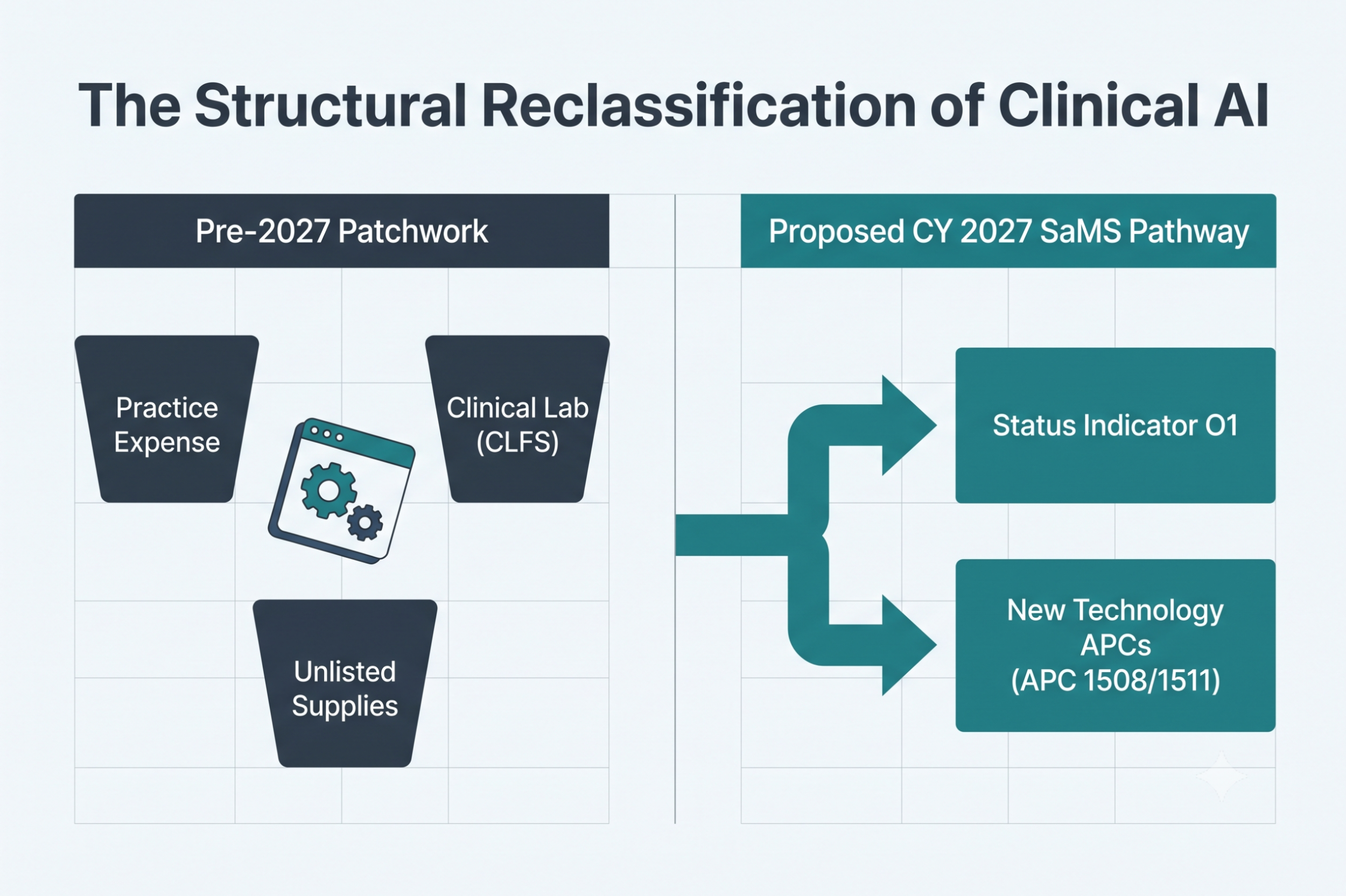
What is Software as a Medical Service (SaMS) under the 2027 OPPS Proposed Rule?
The CMS CY 2027 OPPS Proposed Rule introduces Software as a Medical Service (SaMS), a proposed Medicare reimbursement pathway for qualifying clinical AI and software-based medical technologies. Learn how the new O1 Status Indicator, New Technology APC payments, and updated reimbursement policies could reshape commercialization strategies for digital health companies, healthcare providers, and investors.

What Does the CY 2027 Medicare Physician Fee Schedule Proposed Rule Mean for Digital Health Companies?
CMS's 2027 Medicare Physician Fee Schedule proposed rule introduces sweeping changes for digital health, telehealth platforms, AI-enabled care, remote patient monitoring (RPM), remote therapeutic monitoring (RTM), software-based medical services, interoperability, and physician reimbursement. This comprehensive analysis explains the proposed BB/BC telehealth modifiers, the potential end of third-party RPM staffing models, CMS's new Software as a Medical Service (SaMS) framework, AI-focused requests for information, and the opportunities for digital health companies to influence the final rule before comments close on September 14, 2026.

Does Every Digital Health Company Need a Health Tech Lawyer?
Can AI or a general business attorney handle legal and regulatory issues for your digital health company? In this article, Carrie Nixon explains why health tech startups, telehealth companies, and digital health platforms face unique risks involving HIPAA, Corporate Practice of Medicine (CPOM), Stark Law, Anti-Kickback Statute compliance, healthcare data privacy, reimbursement structures, and AI governance. Learn where AI tools can help health tech founders—and where experienced healthcare legal counsel is essential.

Legal as a Go-To-Market Strategy for Healthcare AI Companies
In 2026, leading Healthcare AI companies are transforming legal and regulatory strategy into a powerful go-to-market lever. From state-level regulatory sandboxes to evolving FDA Clinical Decision Support (CDS) guidance and CMMI reimbursement models, this post explores how companies can accelerate market entry, generate real-world evidence, and build a durable competitive moat.

CMS Announces MAHA ELEVATE Model: A New Opportunity to Shape Reimbursement for Lifestyle, Functional, and Whole-Person Care Services
CMS’s new MAHA ELEVATE Model offers $100M in funding to evaluate evidence-based lifestyle, functional, and whole-person care interventions not currently covered by Medicare. Launching in 2026, this initiative creates a pathway for healthcare innovators, digital health companies, and care organizations to influence future Medicare coverage and reimbursement for chronic disease prevention and management.

2026 Medicare Final Rule Part 1: Rapid-Fire Q&A on RPM and RTM Codes
The 2026 Medicare Physician Fee Schedule (MPFS) Final Rule introduces some of the most consequential updates for Remote Physiologic Monitoring (RPM) and Remote Therapeutic Monitoring (RTM) since their inception. In Part 1 of our rapid-fire video series, health law experts Carrie Nixon and Reema Taneja break down the most significant changes impacting digital health innovators and care management companies.

2026 Medicare Final Rule Part 2: Rapid-Fire Q&A on Upstream Drivers of Health
The 2026 Medicare Physician Fee Schedule Final Rule confirms CMS’s strong push toward whole-person care, creating new reimbursement pathways for models focused on nutrition, physical activity, and social supports. In Part 2 of our series, Mike Pappas and Olivia Goldner analyze the updates to "Upstream Drivers of Health."

CMS Finalizes 2026 Remote Monitoring Reimbursement Updates: What Changed for RPM and RTM
CMS Finalizes Major 2026 RPM/RTM Rule: New Short-Duration Codes & OPPS Valuation Shift. The CY 2026 Medicare Physician Fee Schedule (MPFS) introduces unprecedented flexibility for digital health companies by finalizing new CPT codes for 2–15 day RPM/RTM monitoring (e.g., CPT 99445, 98984–98986) and 10-minute treatment management codes (e.g., 99470, 98979). Crucially, CMS is adopting Outpatient Prospective Payment System (OPPS) data for device supply code valuation, setting a precedent for valuing SaaS infrastructure costs. Learn how these changes—including the "sometimes therapy" designation for RTM—will reshape hybrid virtual care models, episodic monitoring, and reimbursement strategy going forward.

Government Shutdown Looms: How the Medicare Telehealth Cliff Impacts Providers and Patients Starting October 1
Unless Congress acts by midnight, Medicare’s temporary telehealth flexibilities will expire on September 30, 2025. Starting October 1, many non-behavioral telehealth services face new limits, while behavioral health coverage and Medicare Advantage plans remain more flexible. Here’s what patients and providers need to know now.