

Resources
for You and Your Team

MSO-PC Models Under Scrutiny: What Digital Health Companies Should Know About the Federal CPOM Proposal and California Developments in 2026
The MSO-PC model is facing increased regulatory scrutiny in 2026. This article explains the proposed Stop Corporate Takeovers of Physicians Act, California SB 351, recent Attorney General enforcement, OHCA developments, and what digital health companies should review now.

Most Active Digital Health Funds
Comprehensive list of the top digital health venture capital funds. Discover investment stages (Pre-Seed to Growth) and funding focus areas for healthtech founders raising capital.

The CY 2027 MPFS Proposed Rule is here: What’s at Stake for RPM, RTM, and Care Management?
The CY 2027 Physician Fee Schedule (PFS) proposed rule represents the most significant shift to remote monitoring since its inception. CMS proposes to dismantle the third-party clinical staffing model by mandating direct employment for RPM and RTM billing, introducing mandatory initiating visits, and slashing code valuations. Discover how these regulatory shifts affect your digital health operations and how to submit public comments before the September 14, 2026, deadline.
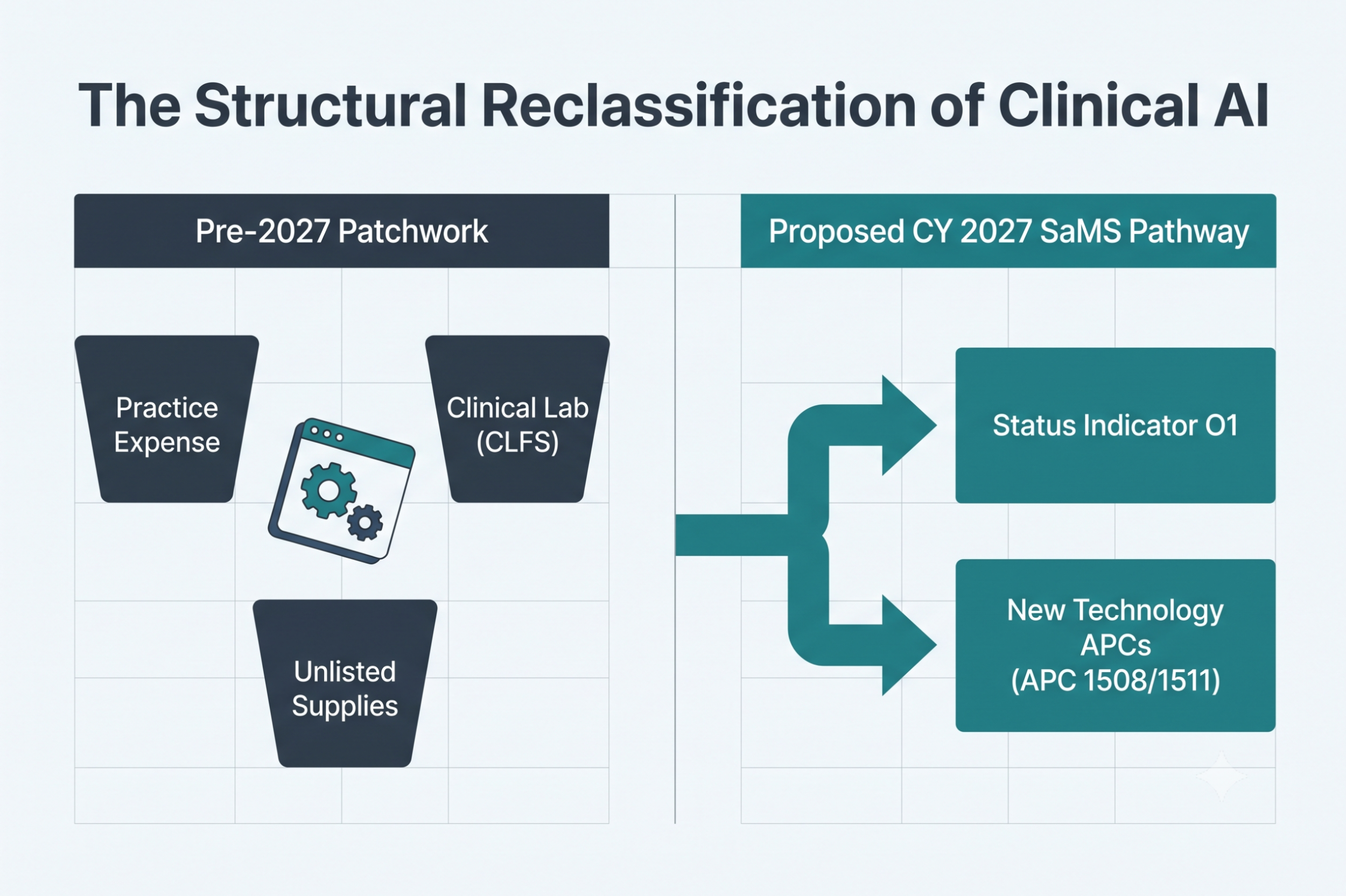
What is Software as a Medical Service (SaMS) under the 2027 OPPS Proposed Rule?
The CMS CY 2027 OPPS Proposed Rule introduces Software as a Medical Service (SaMS), a proposed Medicare reimbursement pathway for qualifying clinical AI and software-based medical technologies. Learn how the new O1 Status Indicator, New Technology APC payments, and updated reimbursement policies could reshape commercialization strategies for digital health companies, healthcare providers, and investors.

What Does the CY 2027 Medicare Physician Fee Schedule Proposed Rule Mean for Digital Health Companies?
CMS's 2027 Medicare Physician Fee Schedule proposed rule introduces sweeping changes for digital health, telehealth platforms, AI-enabled care, remote patient monitoring (RPM), remote therapeutic monitoring (RTM), software-based medical services, interoperability, and physician reimbursement. This comprehensive analysis explains the proposed BB/BC telehealth modifiers, the potential end of third-party RPM staffing models, CMS's new Software as a Medical Service (SaMS) framework, AI-focused requests for information, and the opportunities for digital health companies to influence the final rule before comments close on September 14, 2026.

Fractional General Counsel Services: Senior Legal Leadership Without the Full-Time Hire
Digital health and wellness companies need more than occasional legal advice—they need strategic legal leadership that understands healthcare innovation. Nixon Law Group’s Fractional General Counsel services provide HealthTech companies, telehealth providers, wellness innovators, and healthcare investors with ongoing access to senior legal guidance without the cost of a full-time General Counsel. From regulatory compliance and privacy to contracts, reimbursement strategy, AI governance, and investor diligence, a Fractional GC helps growing companies build scalable legal foundations.

When does AI Health Software Become an FDA Regulated Medical Device? Lessons from WHOOP and UpDoc
Does adding AI to healthcare software automatically trigger FDA regulation? Not necessarily. This article examines the FDA's 2026 WHOOP closeout letter and UpDoc's 510(k) clearance to explain how the agency evaluates AI-enabled digital health products based on intended use, clinical risk, software functionality, user interface design, and validation—not simply the use of artificial intelligence. HealthTech founders, software developers, investors, and regulatory professionals will gain practical guidance on FDA General Wellness enforcement discretion, Software as a Medical Device (SaMD), AI governance, and product design strategies that can influence whether software remains a wellness product or becomes an FDA-regulated medical device.

OIG Advisory Opinion 26-10: What Digital Health Companies Should Know Before Paying Clinician Royalties
Can digital health companies pay physicians and other clinicians royalties tied to platform revenue, product sales, or adoption? In OIG Advisory Opinion 26-10, the Office of Inspector General rejected a proposed clinician royalty arrangement despite fair market value safeguards, finding that physician influence over product utilization created Anti-Kickback Statute concerns. This article explains the OIG's reasoning, key compliance lessons, and what digital health, clinical AI, RPM, RTM, telehealth, and health tech companies should know before structuring clinician compensation arrangements.