

Resources
for You and Your Team

Can Health Coaches Bill Medicare in 2027? CMS’s Proposed Payment and Supervision Rules Explained
CMS has proposed national Medicare pricing for health and well-being coaching (CPT codes 0591T–0593T) starting in CY 2027. While this creates a promising reimbursement pathway under physician supervision, health coaches cannot bill independently, and crucial operational questions around supervision levels remain unresolved. Explore what healthcare organizations, ACOs, and CBOs need to know to prepare.

A Welcome Produce Alert: OIG Signals a Practical Path Forward for Food as Medicine Programs in Advisory Opinion 26-16
In OIG Advisory Opinion 26-16, regulators declined to sanction an FQHC’s Food as Medicine program, offering crucial guidance for digital health companies, health systems, and payors. While free produce triggers Anti-Kickback Statute (AKS) and Beneficiary Inducements CMP risks, OIG exercised enforcement discretion due to strict clinical oversight, financial-need screening, and operational safeguards. Nixon Law Group breaks down the 5 key compliance principles needed to safely structure Food as Medicine and SDOH initiatives.
The CY 2027 MPFS Proposed Rule is here: What’s at Stake for RPM, RTM, and Care Management?
The CY 2027 Physician Fee Schedule (PFS) proposed rule represents the most significant shift to remote monitoring since its inception. CMS proposes to dismantle the third-party clinical staffing model by mandating direct employment for RPM and RTM billing, introducing mandatory initiating visits, and slashing code valuations. Discover how these regulatory shifts affect your digital health operations and how to submit public comments before the September 14, 2026, deadline.
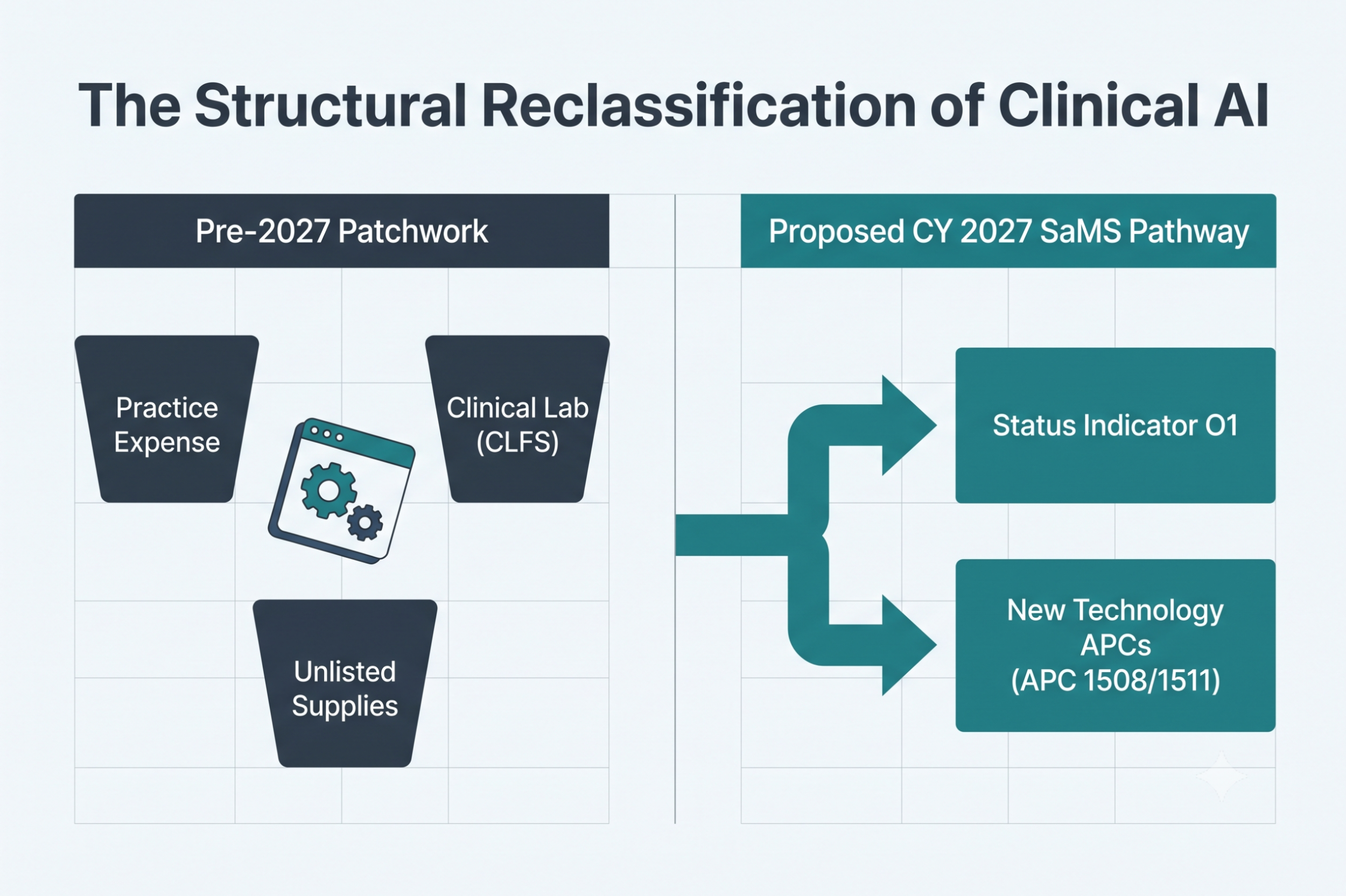
What is Software as a Medical Service (SaMS) under the 2027 OPPS Proposed Rule?
The CMS CY 2027 OPPS Proposed Rule introduces Software as a Medical Service (SaMS), a proposed Medicare reimbursement pathway for qualifying clinical AI and software-based medical technologies. Learn how the new O1 Status Indicator, New Technology APC payments, and updated reimbursement policies could reshape commercialization strategies for digital health companies, healthcare providers, and investors.

What Does the CY 2027 Medicare Physician Fee Schedule Proposed Rule Mean for Digital Health Companies?
CMS's 2027 Medicare Physician Fee Schedule proposed rule introduces sweeping changes for digital health, telehealth platforms, AI-enabled care, remote patient monitoring (RPM), remote therapeutic monitoring (RTM), software-based medical services, interoperability, and physician reimbursement. This comprehensive analysis explains the proposed BB/BC telehealth modifiers, the potential end of third-party RPM staffing models, CMS's new Software as a Medical Service (SaMS) framework, AI-focused requests for information, and the opportunities for digital health companies to influence the final rule before comments close on September 14, 2026.

OIG Audit Alert: What are the Key Medicare Compliance Risks in Virtual Check-Ins and E-Visits?
The OIG’s April 2026 audit report signals heightened Medicare enforcement for virtual check-ins and e-visits. Digital health providers face increasing scrutiny over timing violations, duplicative billing, Modifier 25 misuse, and improper reimbursement for communication technology-based services (CTBS). This article breaks down the OIG’s findings, CMS’s response, and the key compliance steps digital health companies should take now to reduce audit risk and prepare for stricter claims oversight.
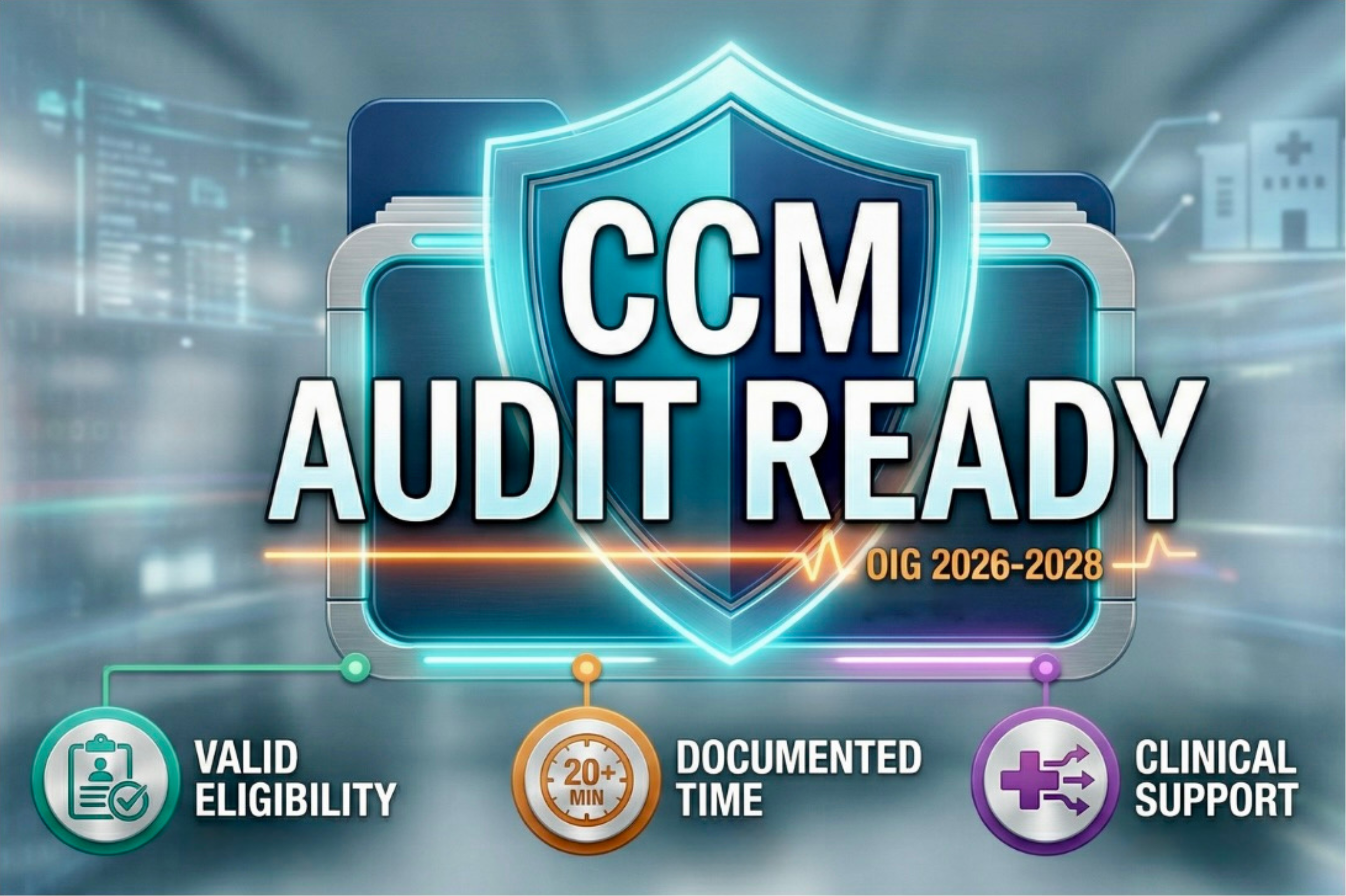
OIG Work Plan Targets Chronic Care Management: What Care Management Companies and Investors Need to Know
The OIG’s 2026 Work Plan includes a major audit of Medicare Chronic Care Management (CCM) services, focusing on eligibility, documentation, and vendor oversight. With rising Part B payments, regulators are targeting compliance risks tied to “multiple chronic conditions” requirements. This article outlines key audit triggers, common red flags, and how care management companies and investors can proactively strengthen compliance ahead of federal scrutiny.

Digital Mental Health Technology - The Quick Breakdown
In this rapid-fire breakdown, Nixon Law Group Senior Counsel Reema Taneja and Digital Health Expert Michael Schellhous cut through the noise to explain the critical shifts in Digital Mental Health Treatment (DMHT) codes.
They cover what the DMHT codes actually reimburse, how they fundamentally differ from Remote Patient Monitoring (RPM) and Remote Therapeutic Monitoring (RTM), and the strict FDA/CMS requirements your device must meet. They unpack the major hurdles—from the lack of a national payment amount (MAC contractor pricing) to provider uptake challenges—and advise founders on how to position their companies for success despite these limitations.
This video is an essential resource for founders looking to understand the pathway to reimbursement and influence the future of digital mental healthcare policy.

CMS Announces MAHA ELEVATE Model: A New Opportunity to Shape Reimbursement for Lifestyle, Functional, and Whole-Person Care Services
CMS’s new MAHA ELEVATE Model offers $100M in funding to evaluate evidence-based lifestyle, functional, and whole-person care interventions not currently covered by Medicare. Launching in 2026, this initiative creates a pathway for healthcare innovators, digital health companies, and care organizations to influence future Medicare coverage and reimbursement for chronic disease prevention and management.

CMS Launches ACCESS Model: The Tools Directory Opportunity for Digital Health Vendors
The CMS ACCESS Model is a 10-year Medicare payment demonstration promoting outcomes-based reimbursement for chronic care management. For digital health vendors—from remote monitoring and wearables to interoperability platforms—the accompanying ACCESS Tools Directory creates a critical, new entry point into the Medicare ecosystem. This post breaks down the shift to Outcome-Aligned Payments (OAPs) and provides a compliance-forward strategy for listing your technology in the Directory to gain visibility and establish trust with Access Model Organizations (AMOs) before the July 1, 2026, launch.

Government Shutdown Looms: How the Medicare Telehealth Cliff Impacts Providers and Patients Starting October 1
Unless Congress acts by midnight, Medicare’s temporary telehealth flexibilities will expire on September 30, 2025. Starting October 1, many non-behavioral telehealth services face new limits, while behavioral health coverage and Medicare Advantage plans remain more flexible. Here’s what patients and providers need to know now.